Julien Bobroff
Laboratoire de Physique des Solides (LPS), Orsay, France
Popularizing condensed matter - mission: impossible?
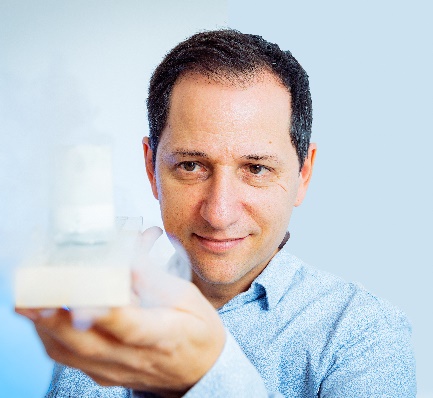 Prize Jean Perrin 2011 SFP,
Julien Bobroff is a physicist at the Laboratory of Solid State Physics in Orsay and a professor at the University of Paris-Saclay. He studied strongly correlated materials for twenty years. Since 2013, he has been leading a new research team, "La Physique Autrement", which explores new ways of popularizing or teaching physics, in collaboration with designers. He has received the Jean Perrin Prize and the CNRS Mediation Medal.
Guillaume Cassabois
Laboratoire Charles Coulomb (L2C), Montpellier
Colored centers in silicon and hexagonal boron nitride
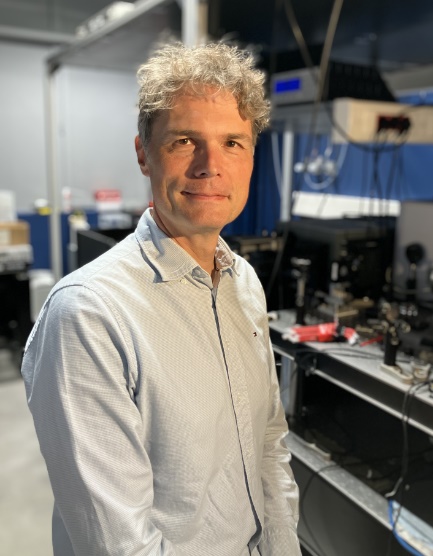 Prize Jean Ricard 2025 SFP,
Guillaume Cassabois is Professor at the University of Montpellier, assigned to the Charles Coulomb Laboratory. His research activities focus on light-matter interaction in the solid state. He is an expert in optical spectroscopy of semiconductor systems using linear and nonlinear optical techniques, ultrafast time-resolved measurements, and quantum optics experiments. In recent years, he has explored colored centers in silicon emitting at telecom wavelengths for quantum technologies, and hexagonal boron nitride for innovative applications spanning the ultraviolet to mid-infrared domains.
Leticia Cugliandolo
Laboratoire de Physique Théorique et Hautes Energies (LPTHE), Paris
Active Matter: Balance and Integrability
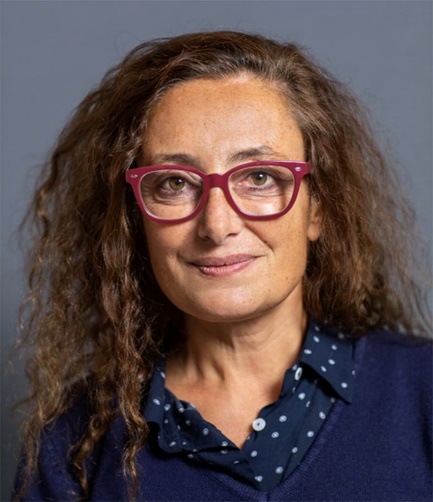 After a master's degree in physics at the National University of La Plata in 1991, Leticia Cugliandolo completed her thesis in physics at the same university in 1991. She did her postdoctoral research at the University of Rome "La Sapienza" from 1992 to 1994 and then at the Condensed State Physics Department at the CEA Center in Saclay from 1994 to 1996 and at the Laboratory of Theoretical Physics at the École normale supérieure in 1997 where she was appointed Associate Professor and then Professor at Paris 6-Sorbonne. She was director of the School of Physics in Les Houches from 2007-2017, and senior member of the Institut universitaire de France in 2004-2009 and 2014-2024. Leticia Cugliandolo is a theoretical physicist recognized for her major contributions to non-equilibrium statistical physics. It has profoundly influenced the study of glasses and spin glasses, in particular by introducing the notions of aging and effective temperature. More recently, his work on active ingredient has shed light on phase transitions and collective behaviors in non-equilibrium systems. She is chief scientific editor of J. Stat. Mech. And deputy editor-in-chief of Advances in Physics. She received the Lars Onsager Prize of the American Physical Society in 2025 and the Irène-Joliot-Curie Prize in 2015, the Marie Curie Excellence Award in 2003, the Guggenheim Fellowship in 2002, and the Langevin Prize in 2002. She is an international member of the National Academy of Sciences, USA.
Yoel Forterre
Institut Universitaire des Systèmes Thermiques Industriels (IUSTI) , Marseille
Physics of rapid motion in plants
 Yoël Forterre is Director of Research at the CNRS and works at the IUSTI laboratory (CNRS / University of Aix-Marseille, France), after obtaining a PhD from the University of Provence and completing a post-doctorate at the University of Cambridge. His research focuses on the physics of granular media, complex fluids and plant biomechanics. He is co-author of two books: one on granular media (Cambridge University Press) and the other on plant physics (Royal Society of Chemistry). He was awarded an ERC Consolidator Grant in 2014, the Ernest Deschelle Prize from the French Academy of Sciences in 2017, and was elected Fluid Mechanics Fellow by the European Mechanics Society in 2019. Since 2017, he has led the CNRS's GDR PHYP, which brings together the French scientific community working on plant biophysics and biomechanics.
Laura Heyderman
Institut Universitaire des Systèmes Thermiques Industriels (IUSTI) , Marseille
Addressing the challenges in fundamental and applied physics associated with mesoscopic magnetic systems
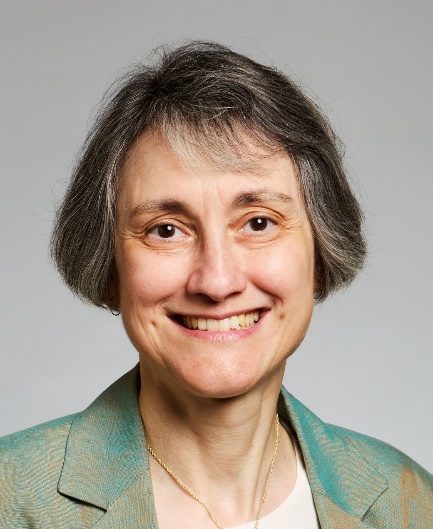 Prize Charpak-Ritz 2026 SFP,
Laura Heyderman is Professor of Mesoscopic Systems at the Department of Materials, ETH Zurich and Group Leader at the Laboratory for Multiscale Materials Experiments at the Paul Scherrer Institute. She carried out the work for her University of Bristol PhD at the CNRS in Paris and, following a number of positions in academia and industry in the United Kingdom, she moved to Switzerland. Her research is based on the fabrication of mesoscopic magnetic systems and their characterisation at different timescales, both with laboratory-based setups and with large scale facilities, in particular using synchrotron x-rays (see Link). She addresses questions in both fundamental and applied physics, with key results including the observation of emergent magnetic monopoles and phase transitions in artificial spin ice, synchrotron x-ray tomographic imaging of 3D magnetic structures, electrically controlled magnetic domain wall logic and the demonstration of complex motion in origami micromachines. She is a Fellow of the UK Institute of Physics, the IEEE and the American Physical Society. She was also elected Fellow of the Royal Society in 2023 and received the 2026 Charpak-Ritz Prize of the French and Swiss Physical Societies.
Dominique Legendre
Institut de Mécanique des Fluides de Toulouse, Toulouse
How to Improve the Drop Performance of Water Bombers
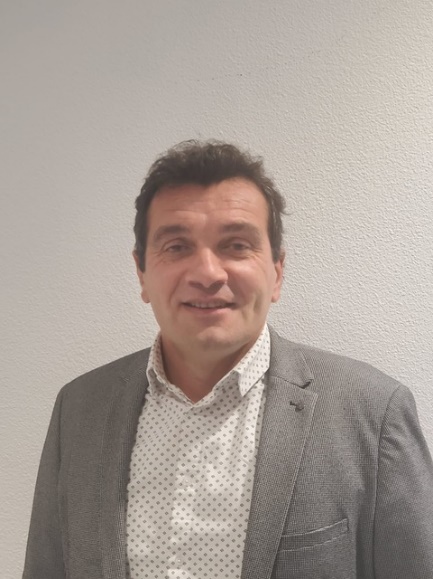 Prof. Dominique Legendre graduated with a PhD in Fluid Mechanics from Toulouse INP, France, in 1996. He has been a Professor of Fluid Mechanics at Toulouse INP since 2007, and he is Deputy Director of IMFT (Institut de Mécanique des Fluides de Toulouse), one of the leading fluid mechanics institutes in Europe. He has been Chairman of the Governing Board of the International Conference on Multiphase Flows (ICMF) from 2022 to 2025. His main line of research is multiphase flows, in particular bubble and drop dynamics, including heat and mass transfer, icing, and wetting phenomena. Over the last decade, he has developed an original research program on airtanker firefighting efficiency with a strong connection to the aerial firefighting industry. In particular, he has developed the NaSCa code to model ground deposits of liquid dropped by any aerial system. In 2019, a patent was granted for a new delivery system, KIOS, in collaboration with Kepplair Evolution, and he is now an expert for the KE72 project to transform an ATR72 into an airtanker. He has led several international publications on the subject, in particular a contribution to the Annual Review of Fluid Mechanics in 2024. In 2023, in Washington, DC, he delivered an invited keynote lecture on the fluid mechanics of airtanker firefighting at one of the most prestigious international fluid mechanics conferences (the Annual Meeting of the Division of Fluid Dynamics of the American Physical Society). For all his contributions, he received the “Transfert Technologique” Award of Toulouse University in 2022.
Cécile Repellin
Institut de Mécanique des Fluides de Toulouse, Toulouse
Strongly correlated insulators in moiré materials
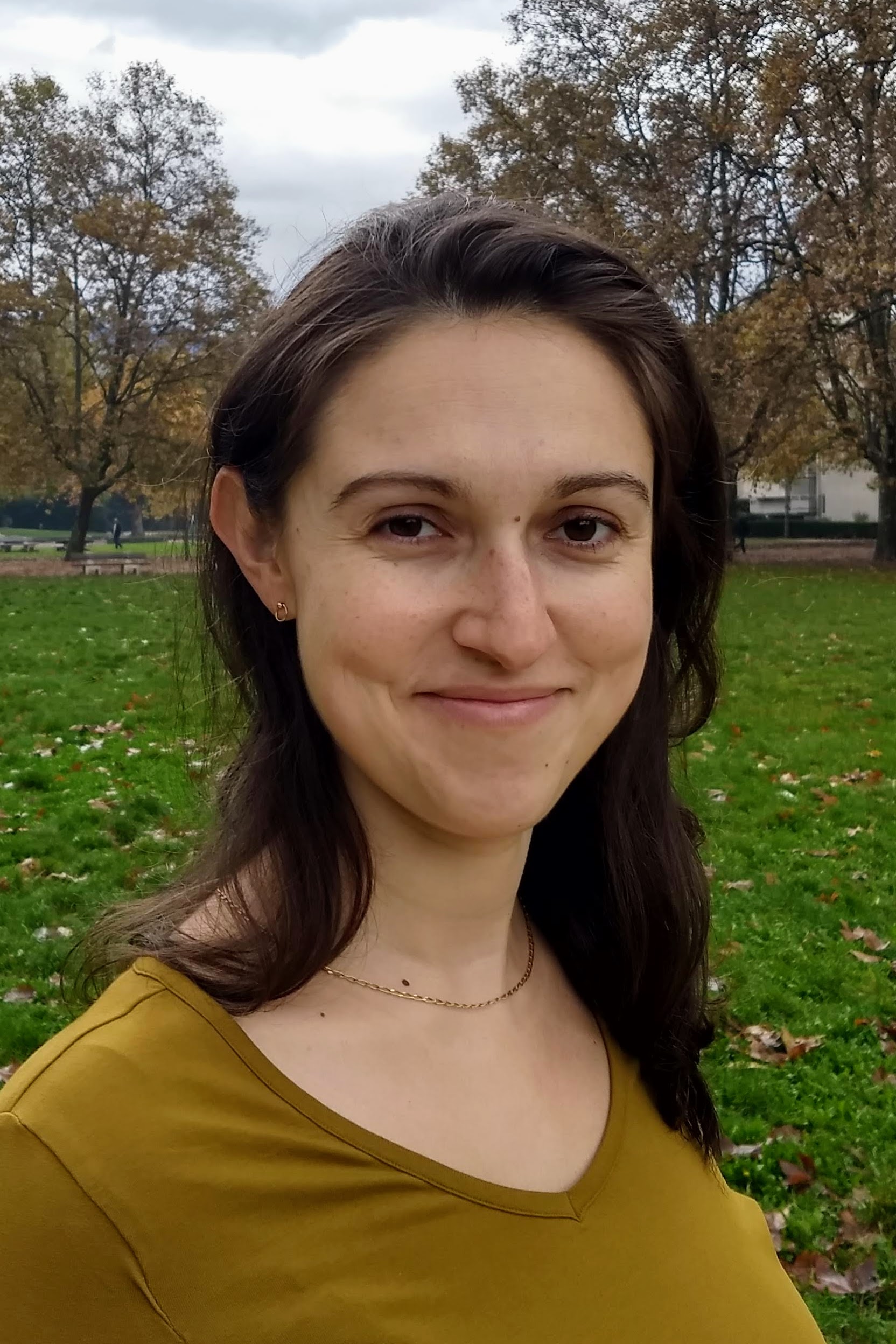 Prize Ancel 2025 SFP,
Cécile Repellin is a CNRS research scientist at the Laboratory of Physics and Modelling of Condensed Matter (LPMMC), University of Grenoble Alpes since 2019. After completing her PhD at the École Normale Supérieure, she undertook two postdoctoral fellowships, first at the Max Planck Institute for the Physics of Complex Systems (Dresden), then at the Massachusetts Institute of Technology. Her theoretical research focuses on strongly correlated quantum systems in condensed matter, in particular strongly interacting electrons in two-dimensional materials, the fractional quantum Hall effect, and ultracold atomic gases. She is particularly interested in flat bands in moiré materials, such as twisted bilayers of graphene or semiconductors, as well as quantum simulation of N-body phenomena in optical lattices.
Pascale Senellart
Centre de nanosciences et de nanotechnologies (C2N), Quandela, Palaiseau
To be announced
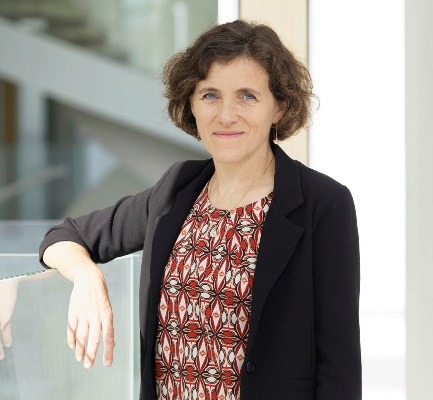 Prize Jean Ricard 2023 SFP,
Pascale Senellart is a research director at the CNRS, at the Center for Nanosciences and Nanotechnologies, University of Paris-Saclay. Her research is at the interface between solid-state physics, quantum optics and nanotechnology. She studies semiconductor quantum dots, nano-objects made up of thousands of atoms that behave as one and can thus emit photons one by one. In 2017, she co-founded the startup Quandela, which develops and commercializes single photon sources to support the development of quantum technologies. Today, Quandela is developing the first light-based quantum computers. Pascale Senellart joined the CNRS in 2002, she was a research director in 2011 and a lecturer at the École Polytechnique since 2014 where she teaches quantum mechanics. In 2020, she participated in the creation of a training course in quantum technologies on the Saclay campus. She now devotes 30% of her time to the scientific advice to Quandela. His work has been rewarded with the CNRS Silver Medal (2014), the Mergier-Bourdeix Grand Prize of the French Academy of Sciences (2021), the Jean-Ricard Grand Prize of the French Physical Society (2023). She was elected a member of the Academy of Sciences in 2022 and of the Academy of Technologies in 2024. She has been a member of the Presidential Council for Science since 2023.
Guillaume Schull
Institute of Physics and Chemistry of Materials of Strasbourg (IPCMS), Strasbourg
Atomically resolved fluorescence by STM: exploring energy transfer at the molecular limit
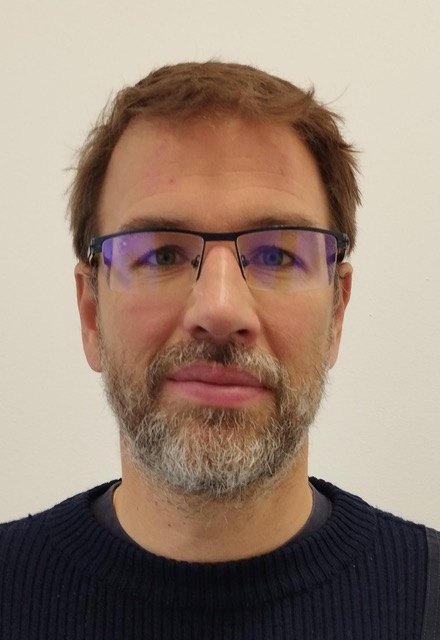 Prize Ancel 2024 SFP,
Price Ancel SFP Guillaume Schull is a CNRS Research Director at the Institute of Physics and Chemistry of Materials of Strasbourg (IPCMS), University of Strasbourg. He obtained his PhD in nanophotonics at CEA Saclay (2006), followed by a postdoctoral fellowship at Kiel University (2006–2009) specializing in scanning tunneling microscopy (STM). He joined the CNRS in 2009 and has since developed approaches that combine STM with optical spectroscopy to probe electronic and luminescence properties at the atomic and molecular scale. His work notably demonstrated that fluorescence mapping can reach sub-nanometer resolution, a research field that bridges surface science, molecular electronics, and nanophotonics. He is the recipient of both an ERC Consolidator Grant and an ERC Advanced Grant, supporting his work on ultra-high-resolution optical spectroscopy.
Patrice Simon
Centre Inter-universitaire de Recherche et d'Ingénierie des Matériaux (CIRIMAT), Toulouse
Nanoconfinement effect in materials for electrochemical energy storage application
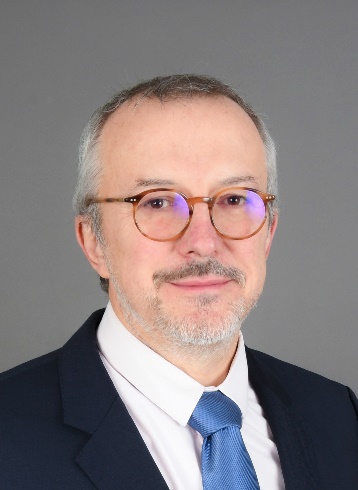 Patrice Simon is an Exceptional Class Professor of Material Science at Université de Toulouse. His research activities focus on the fundamental understanding of electrochemical processes occurring at the material / electrolyte interfaces in electrodes for electrochemical energy storage devices (batteries and electrochemical capacitors). He currently leads the National Batteries Research Program (PEPR Batteries, 2023-2029) and is Director of the French Network on Electrochemical Energy Storage (RS2E). Patrice Simon is Fellow of the French Academy of Sciences (2019), French Academy of Technology (2018) and European Academy of Sciences (2018).

 Loading...